East African countries discuss digital integration
Sep 24, 2026


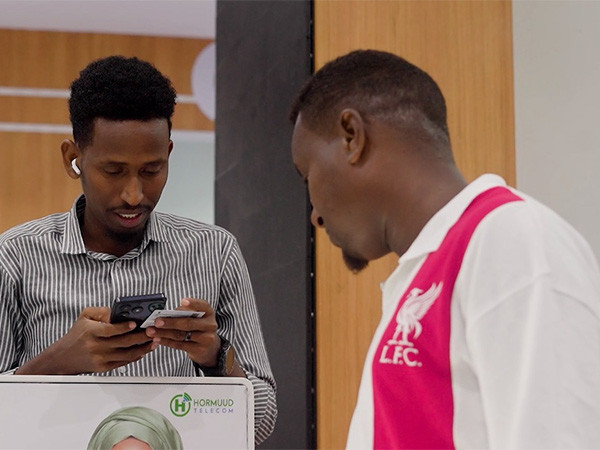
While many markets worldwide – and particularly in Africa – face a connectivity gap, the issue is particularly acute in Somalia. Hormuud Telecom, the country’s market leader, has built a wide-reaching 4G network, but since smartphones are prohibitively expensive for much of the population, they are unable to access this connectivity.
There is of course huge demand for data access due to the benefits that connectivity can provide; for example, over 80% of Somalis use mobile money daily, and those that cannot access data risk being locked out of the country’s increasingly digital economy.
Against this backdrop, device financing has emerged as a viable way of bridging this affordability gap. Founded in Kenya as a distributor of smartphones for Chinese brands such as Oppo and ZTE, Get-Phone has since expanded to Tanzania and now into Somalia via a collaboration with Hormuud that has seen it evolve into a device financing platform. Now, the firm is working with the Somalian operator to provide devices via points of sale throughout the country, as well as subsidised data for customers that can be covered by regular payment plans. We spoke to Get-Phone’s CEO Omar Abdi to learn more about the firm’s findings from its first quarter of activity in Somalia – and how it hopes to revolutionise credit assessment in the market.
How did Get-Phone’s partnership with Hormuud come about?
Because a lot of Hormuud’s network had not been utilised in the country, it was in their interest to collaborate with us to make sure that people have access to smartphones [and] data. It took us a little bit of time to negotiate back and forth, but on May 5th this year, we came to an agreement that this project should be launched in the best interests of the public of Somalia.
We launched a device financing company in Somalia which now operates from Taleh, and also operates 12 branches within Mogadishu from Hormuud branches. We received our first stock on July 15th, but we started expansion on 1st August; from then until 1st October, we sold over 7000 devices, on average around roughly 3500 per month. We didn't want to upscale immediately because we were learning a lot from the experience and the market we are working with - it's quite different than what we experienced in Kenya and Tanzania. We wanted to see the payment behaviour of our customers, data that needs to be captured for future analysis. Now that we have generated enough samples and done our analysis, we will add 15 more branches in South Central Somalia, starting from Galmudug all the way to Jubaland. We want to open three or four branches in each of the federal member states and expand our service to customers in these areas. That makes roughly 27 in total for the rest of the year. If we are encouraged again by the payment behaviour and repayment trends, then we will accelerate to another 15 branches by January next year.
Affordability is an issue in Somalia – how high is smartphone demand despite this? Is smartphone access a priority for users, and is this driving financing models?
It’s not being led by Hormuud – it’s people wanting to get online. They need plans like this to be able to afford devices. Of the 7000 devices sold in the months of August and September, we identified that 82% of the people who acquired those devices are first-time smartphone users. People are also motivated by the data we are providing - initially we started with 1GB per day, but we doubled that; with Hormuud giving us a further subsidised 1GB, people are now enjoying 2GB per day. We haven't changed our payment rates, we have increased the data, and if in Mogadishu alone, we were able to get 82% of people to be first-time smartphone users, what do you think when we go to the remote and peripheral areas where access to smartphones is extremely limited? That encourages us - we are giving smartphones to the right people who will actually use the data and become digitally connected to financial inclusion.
Affordability is an issue. We have a low-entry phone, which we were assuming in the beginning would be the highest selling device, but to our surprise, that's now the lowest selling device even though it's way cheaper. The other devices are fast selling, but still people prefer to buy one with higher specifications. We are also capturing very good data when it comes to household income, the source of income, the number of households, whether the client is female or male, age grouping. To our surprise, we found that 94% of low-income people are actually meeting their repayment plans, so there is a 5% difference among those with a low income and those with a middle income (around 89%). Even if the phone has the highest specification, the people who are paying on time are the ones who have less income. Our assumption was because we are now trying to bring more people into smartphones, people should care about the pricing and they will choose the cheap one, but this is actually what we learned in our three months in operation.
Which smartphone brands does Get-Phone resell?
Get-Phone works with ZTE, and we are also onboarding two more brands now: Oppo and Orbit Mobile, both also from China. We are in discussion with Samsung to provide some stock to us so that we will onboard them in selling their devices to Somalis. For Samsung, there are models that are even cheaper than the ones we are selling in the market, simply because of the recent price increase of the memories and the chipsets, Samsung maintained a consistent supply chain without changing the prices - you find some of the Samsung models are cheaper than the ones that are now bought in our Somali market. So that's why we were trying to bring that model into the platform; of 10 people who come to our point of sale, six of them ask for Samsung. It’s a known brand in the market, even though people appreciate the low daily payment rates and low deposits and bulk of data, but if Samsung is provided, I believe it will also enhance the number of people who will actually get those smartphones.
If the people who perhaps stand to benefit the most from gaining access to data for the first time – those who are from perhaps a lower income background, living in a more remote area rather than in a city – how does this impact how creditworthiness is assessed in markets such as Somalia?
Initially we developed our own scoring mechanism by having two parameters: the number of years the customer has been using the network, and the amount of money that has been moved using [Hormuud Telecom’s mobile money platform] EVC. Somalia depends a lot on mobile money, and it's a dollarized economy. 99% of the transactions happens through EVC, so our credit logic now takes these two parameters and returns a credit score of between 100 and 999. If the customer scores below 500, we categorise them as high risk. There is no evidence-based data that tells us that the higher the customer risk, the higher the repayment issue, so for the first quarter of the operation, we gave phones to all customers regardless of their credit score. On 31st October, the first quarter will close for the three months we were selling those devices. We wanted to do some analysis: do the people with a low credit score have the highest default rate? If no, then there's no point in denying a customer a phone based on the low credit score. In early analysis, we identified that the people with a low credit score, with low income, are the ones making the best payments. The 10s are actually coming from there.
We identified that some of the middle income people who are taking our phones use them as a second option smartphone; they hold a high-end Samsung or iPhone, and they want to use this phone for their business, or perhaps maybe they want to access the data which is given in bulk payment. To get 2GB per day, you need to spend around $1.2, but to get the phone and also the data, all you need to spend is $0.85, so it's cheaper when it comes to buying data. If the customer gets a phone with 2GB data plus 30 minutes of calls at 85 cents, it's preferred than buying data on your own high-end smartphone. Maybe they are using this data for business purposes, so most of the time it's not a primary phone for them, but for the people who have first-time smartphone, this now has a high utility for them. The repayment is good because of these things, but we need to provide data to support our assumption. We have almost 10,000 devices out there, so that's a very good sample for analysis, and we could now categorise our analysis into gender and income level, plus age grouping – older people typically make better repayments than those aged between 18 and 40. We need to do analysis and come up with a plan to either continue the way we were working or make some modifications to our credit scoring.
Which modifications would you make? Your data supports the idea that people from lower income backgrounds and perhaps informal income actors such as market traders and farmers are clearly making regular payments on this, and that they're participating more reliably in the scheme. How would modifications reflect that to support people on lower incomes?
We have different phones with different pricing structures. So, if our credit score suggests that people with low credit are the ones who are defaulting more, then the change could be the number of phones qualified to be given to the low scoring risks. We can make certain limitations for those who have a low credit score or low income to only access certain type of models, while others who score more and have more income can be eligible for all our products. For young people who are being supported by their parents, we also may qualify them for low-entry phones, rather than them taking a high-end phone. These are things that could be informed by the data, but it's not yet confirmed. We see that even students who are first time users of smartphones are likely to make payments better than the ones who have a high income and are even working for the government or the private sector. This needs to be informed by our data, which we have generated from August 1st to 31st of October. That would be our first quarter, and then our data scientists are here trying to identify all the trends on a weekly basis, but by October 31st, they will do a full analysis on all those things: is there a relationship between credit scoring, gender, age and repayment? All of these are under study.
What are the main challenges of developing a creditworthiness rating based on this data?
The most interesting thing is now that national ID is not universal; it's not a document that's owned by every citizen, particularly in the federal member states. I would assume the percentage of the citizens that have ID is less than 10%; our primary identifier is now the same number issued by Hormuud, and that's something that we are worried about. There is no consolidated data as to what is the credit worthiness of those who have ever taken a loan before from banks or microfinancing. We had a meeting with a number of banks in Somalia and Hormuud to consolidate our credit worthiness systems. A customer could get credit from a bank or operator, then default and get another loan - there is no synchronised database where one customer now can be identified as a defaulter, so we are now building a system that gets the information from all those banks and returns the willingness to pay, because most of the credit scoring in Somalia is focusing on ability to pay. There are people who are able to pay, but are they really willing to pay? And there are people who are not able to pay by credit scoring, but they are willing to pay, like we have now experienced with smartphones. We want these data to be fed to the new system we are working on, so that we will be connected to Salam Bank, to Debshil Bank, Premier Bank, IPS Bank, and they can return the information about which customers are actually paying the loans, so that we can give them a credit rating of that person based on ability to pay. This is what we want to build, and it requires time and data from all the data processors, including Somtel, Hormuud, and the private banks that exist in Somalia. This is an initiative we started recently. It's progressing well, and I hope within one year we will be in position to identify all of this in one platform where the voters can be rated, and and people with a good standing could also be. Checked by just putting their ID or their phone number, then the person will be identified as a good credit worth bill or not.








Company registered in England, number 5724661
All content copyright © 2005-2026 Developing Telecoms Ltd. All rights reserved.