OpenAN project aims to enable O&M agent collaboration in autonomous networks
- Details
- Category: Optical & Fixed Networks
- 36284 views
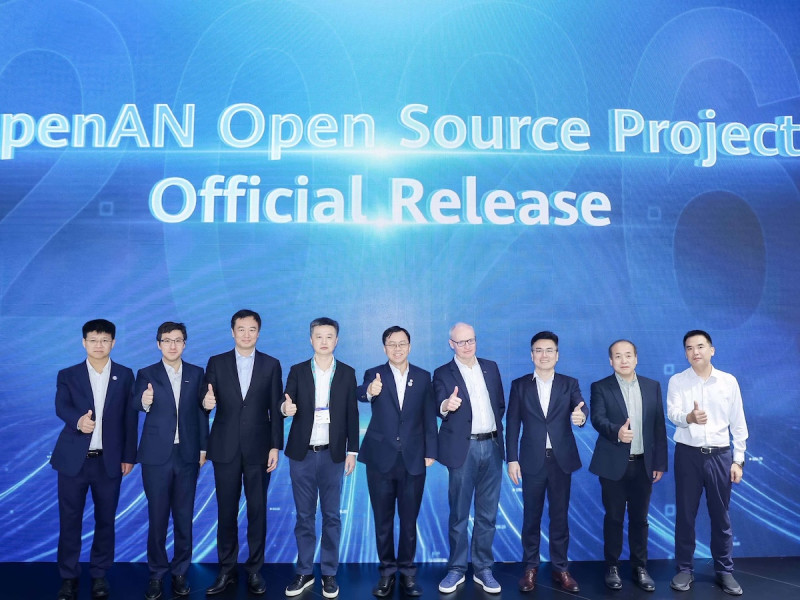
China Mobile, the GSMA, Huawei and other partners have officially launched “OpenAN”, an open-source project that aims to enable collaboration and interoperability between O&M agents in autonomous networks, allowing them to evolve to Level 4 autonomy.
The project – launched on Thursday at Mobile World Congress Shanghai 2026 – is part of a broader effort by the telecoms industry to build an open, interoperable and AI-native ecosystem for autonomous networks within the Linux Foundation Networking (LFN) community. China Mobile is serving as the chair of the OpenAN project.
According to the TM Forum’s AN Levels Evaluation Methodology, Level 4 autonomy means networks can largely run themselves, handling most operational tasks automatically, with human oversight for only the most complex or strategic situations.
As telcos start commercially deploying Level 4 autonomous networks on a larger scale, the telecoms industry's focus is shifting beyond operational automation toward autonomous decision-making and value creation. A fundamental building block for next-generation network operations is intelligent agents, which enable AI to move from isolated applications to collaborative intelligence across networks, operations and services.
However, this poses numerous challenges, ranging from trusted AI collaboration, cross-domain and multi-vendor interoperability to large-scale multi-agent orchestration, and the cost efficiency of token-based AI interactions.
OpenAN proposes to tackle these challenges via an open, community-driven approach to provide a common technical foundation for telecom AI agent collaboration at both the protocol and framework layers, developed under the Linux Foundation's open governance model.
At the protocol layer, the project extends the A2A (agent-to-agent) protocol with A2A-T (agent-to-agent for telecoms), which provides telecom-specific SDKs and enhancements in reliability, security and support for high-value operation scenarios.
At the framework layer, OpenAN provides a complete open-source framework that supports secure on-premises deployment for communications service providers, significantly reducing Internet exposure while enabling enterprise-grade AI deployment.
The framework also integrates a standardized core registry module and A2A-T toolkit led by China Mobile. The module and toolkit – which have both have been contributed to the LFN community – allow reusable capabilities to be assembled and deployed once operational scenarios are defined.
OpenAN aims to accelerate industry collaboration, expand community participation, and promote large-scale adoption of telecom AI agents across commercial networks worldwide. China Mobile said OpenAN welcomes contributions to the project from operators, vendors, AI developers and research organizations worldwide.
China Mobile said the launch of OpenAN “represents the world's first fully open-source framework dedicated to telecom O&M agent collaboration, marking an important step in bringing multi-agent technologies from research into real-world deployment.”
Looking ahead, China Mobile said it will “continue working with global industry organizations, open-source communities, communications service providers, technology vendors and AI partners to expand the OpenAN ecosystem, strengthen its governance and technical capabilities, and encourage broader community participation.”
China Mobile itself achieved Level 4 autonomy last year. David Martin, associate senior analyst at STL Partners, recently told Developing Telecoms that developing market operators potentially stand to benefit from China Mobile’s experience, noting that adopting autonomous-network technology early could help them tackle the challenges their developed counterparts are already facing in their automation journeys.

More Articles you may be Interested in...


HBL and RAD to support comms for Indian Railways





Apple Pay finally arrives in India

Battery deal targets telecom infrastructure in India


TRAI launches platform to rate digital connectivity









SES IS-20 satellite supports JioStar


Construction begins on Asia’s Candle cable system