Orange MEA: creating trust through digital inclusivity
- Details
- Category: Consumer Ecosystems
- 26113 views
In low-income markets – such as much of Africa – customer loyalty can rest precariously on affordability, so establishing trust is essential for operators if they wish to retain their community.
As a market leading operator group in the region, Orange Group understands the importance of generating trust through delivering value – not just in terms of costs, but through community impact and facilitating growth.
At a recent press conference in Casablanca, Orange’s CEO Christel Heydemann and Head of MEA Yasser Shaker underlined how Orange Group believes in forging trust to fuel this impact, discussing how Orange MEA is a key growth engine for the wider group – and how the region is at the heart of the group’s ‘Trust the Future’ strategy.
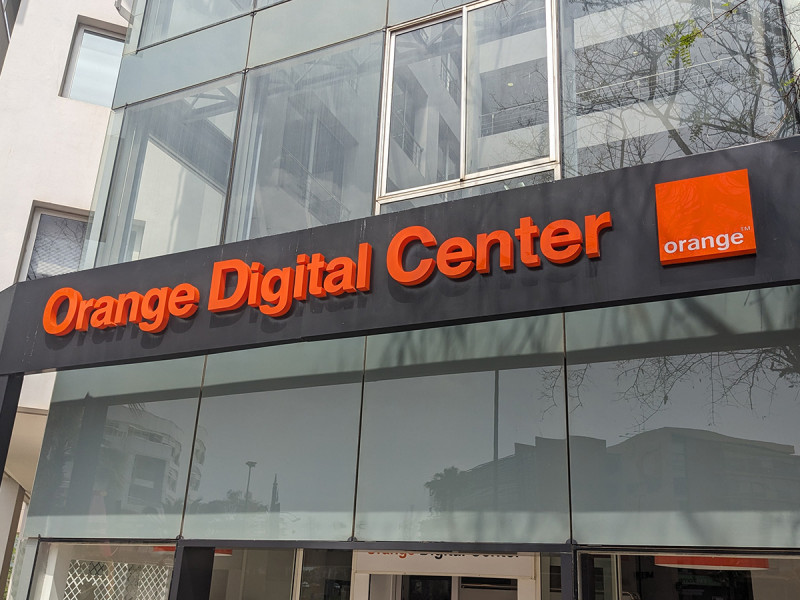
To engender trust among its communities, Orange focuses on enabling digital inclusion. This demonstrates the group’s commitment to its user base, providing training and education that deliver long-term impact. Orange Digital Centres are a key lever through which the group invests in the development of its ecosystem.
Orange has launched 53 Digital Centres across 16 countries in its MEA footprint, with a focus on start-up incubation and entrepreneurship. The program has partnerships with 167 universities and is used by 140 start-ups - 24 of which received financing from the group’s dedicated investment fund, Orange Ventures.
Free and open to all, Orange Digital Centres are akin to a CSR (Corporate Social Responsibility) programme in MEA, providing tuition as well as access to the Digital Centre’s facilities and tools. Through these centres, Orange aims to build an ecosystem that helps young people become digital professionals via accelerated training and upskilling courses.
The Digital Centres offer training in areas such as AI readiness, cybersecurity, cloud computing and data, and aim to foster end-to-end entrepreneurship, supporting youth programs to help young people build their own startups. The centres offer access to coding schools through which students can obtain internationally recognised certifications, and can help participants facilitate internships to provide professional immersion. In 2024 alone, over 11,000 young people were certified in digital professions through the Digital Centres, facilitated through agreements with partners including AWS, Coursera and Google.
Digital Centres can be hosted in universities to train youth in digital skills via hands-on, practical training. Orange notes that the initiative has a particular focus on helping women to develop their skills, and that there is a focus on installing practical infrastructure such as solar panels and fibre optic networks.
Within the Digital Centres, different programs focus on various aspects of development; for example, the Orange Fab start-up accelerator supports new local companies. Orange has been supporting start-ups via its Digital Centres for 16 years, with an emphasis on incubating local teams as well as identifying solutions tailored to individual countries. Typically, this is achieved via national competitions, with start-ups selected on the basis of the specific relevance of their solutions to their domestic markets.
In terms of the start-ups it looks to incubate, Orange is sector-agnostic. Indeed, the startups themselves are expected to provide the sectoral expertise – Orange brings the digital edge, creating a new economic model that offers the benefits and agility of Orange’s corporate expertise, offering assistance with legal and administrative aspects of business as well as on structuring operations, partner outreach, and market access. The program has helped to accelerate start-ups across a wide range of sectors, including health, education, fintech and agritech, and there is a particular focus on sustainability, as well as using digital technology to drive performance and productivity.
Orange has also partnered with start-ups focused on detecting and preventing cyberattacks – a crucial issue worldwide, but with particular relevance in Africa as cybersecurity has long been the preserve of large corporates. This incubation program aims to democratise this technology.
The Digital Centres are aimed at powering start-ups across these sectors through digital transformation strategies and government partnerships. The centres have a significant impact on skills transformation – 69% of young people involved felt that their skills had increased, and 95% of the cohort were hired after receiving training, demonstrating how the Digital Centres initiative creates demonstrable employability outcomes.
Orange’s Digital Centres are a core pillar of the group’s Corporate Social Responsibility strategy, which is rooted in digital equality and social inclusion, and aims to prepare young people for the job markets specific to their geographies. Orange’s wide regional reach ensures that universities in remote regions are not overlooked by the strategy, thereby reducing digital inequality, while Orange supports the Hello Women initiative in over 20 countries, with the goal of increasing the number of women working in digital professions.
Heydemann underlined that Orange as a company is committed to developing a diverse workforce, noting that the company has achieved 36% female leadership in the region with several female CEOs of national units. Heydemann added that the MEA region could be proud of the number of female graduates with an engineering background, as this was often lacking in Europe, and noted that Orange aims to appoint women to more than 25% of its more technical jobs.
To strengthen trust and engagement with underserved communities in Africa, Orange is focusing on developing vocal AI agents for underrepresented languages and dialects. Shaker explained that thousands of languages are spoken in the MEA region – far more than in Orange’s other regions – which increases the importance of local language models for users in apps such as Max It. Using a no-code platform, indigenous speakers can create AI agents in their own languages, which helps speakers access technology in their own tongue, helping them to feel more confident using new services, while also improving the quality of the language’s available dataset.
Using AI to strengthen local language models and improve inclusivity is just one way in which expanding digital access is helping Orange to cement trust with its users. Operator groups looking to grow in Africa and the Middle East should take note – practical applications of new technologies that can directly impact user’s lives demonstrate their own value to customers. By positioning themselves as a provider of digital inclusivity, Orange strengthens trust with its users – and MEA’s young, tech-literate population is eager to avail themselves of the training, skills and employment opportunities that are available through this ecosystem.

More Articles you may be Interested in...





Strategies for sovereignty in the Age of AI






Yas Tanzania and Ericsson partner for enhanced 4G

Orange Jordan to support census plans

TM Forum: Trust will decide the AI Race to 2030




Google to partner Kenyan Tourism ministry




Togo and Poland sign drone deal