Huawei unveils Next Generation WAN to unlock new operator growth in the AI era
- Details
- Category: Vendors
- 27484 views

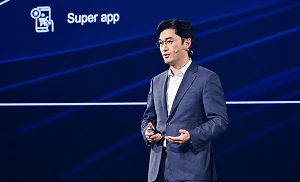
At MWC Barcelona 2026 in Barcelona, Huawei’s President of the Data Communication Product Line, Leon Wang, set out a clear message to global carriers - traditional connectivity alone will not deliver the next wave of growth.
Instead, operators must evolve towards AI-enabled, intelligent wide area networks - and Huawei’s newly launched Next-Generation Wide Area Network (Next Generation WAN) portfolio is designed to help them do exactly that.
The challenge facing operators is stark. Global network traffic is forecast to grow at a compound annual rate of 20% between 2025 and 2030, yet average revenue per user is expected to rise by just 1.3% over the same period. At the same time, network operations and maintenance (O&M) costs account for more than 30% of total operating expenses, with a significant proportion driven by repetitive manual processes.
Meanwhile, investment in computing power is accelerating. In China, operators are increasing computing power spending by more than 20% annually, but more than 40% of computing resources remain underutilised. The gap between infrastructure investment and monetisation is widening.
Against this backdrop, AI has moved from experimentation to execution. According to Huawei, 170 operators worldwide have now released AI strategies, up from 70 a year ago. As Wang explained during the session: “AI has become an important tool for operators to enable experience operations, improve O&M efficiency, and accelerate the monetisation of computing power. “Some operators have already reaped the first wave of benefits.” He also pointed to the wider industry shift, noting that “last year, more than 70 operators around the world had released AI strategies. This year, the number has increased to 170.”
Examples of operators already deploying AI in their networks include the French operator Orange, which saw its operations and maintenance efficiency increase by 39% after upgrading its fault diagnosis and automated analysis capabilities. China Telecom was also highlighted, having integrated computing and network services to create new growth opportunities, resulting in a 15% increase in monetisation of new AI-driven services.
AI Agents are now emerging as the next step. More than half of operators have begun rolling them out, with network operations the second most popular use case. Industry data suggests that AI Agents can fully automate up to 70% of repetitive O&M tasks, while assisting with complex scenarios by providing recommendations for human validation.
Huawei is already applying network AI Agents in commercial deployments. As Wang explained, the company is working with Guangdong Mobile to bring agent-driven automation into network operations. “By deploying network AI agents, 90% of alarms can be diagnosed automatically,” he said. “It can accurately figure out if we need to send someone to the site. When we need to send someone, it can make sure that one site visit is enough to fix the problem.” For issues that do not require a site visit, Wang added, “the intelligent agent will directly provide a solution. The O&M staff just need to confirm it, and the rest of the operations will be fully closed-loop automatically by the Agent.”
Industry collaboration is reinforcing this direction. During UBBF 2025 in Paris, the World Broadband Association (WBBA), together with leading global operators, released the Net5.5G R2 white paper, promoting the integration of AI Agents into networks and accelerating the shift toward “All Intelligence”.
To support this transition, Huawei has launched Next Generation WAN, which Wang described as a major step forward for operator IP infrastructure. “As we move into the All Intelligence era, Huawei launches NG WAN,” he said. “It upgrades the IP bearer network in three dimensions to bring new value to operators.” These include security and resilience, multi-layer awareness, and network autonomy. “We’ve built security capabilities directly into our routers, achieving native, end-to-end security,” Wang explained, while multi-layer awareness allows networks to sense both bit and token traffic to support premium services and computing monetisation.
These capabilities are delivered through new hardware boards based on the NetEngine 8000 Series routers, including the industry-first lossless intelligent computing board, multi-dimensional traffic-aware board, intrinsic security board, intelligent resilient main processing unit, and industry’s first intrinsic QKD board.
Multi-Dimensional Awareness for the encrypted era
In the home broadband market, many operators have introduced differentiated packages to drive revenue. However, as encrypted traffic now accounts for more than 50% of internet traffic, traditional application identification methods have become less effective, undermining experience assurance.
Huawei’s answer is the Xingluo Identification Engine - in live network testing with one operator, more than 98% of encrypted traffic was precisely identified, ensuring application-level experience remains visible despite encryption.
Beyond consumer broadband, enterprise demand for rented computing power presents another growth avenue. However, traditional networks are not optimised for AI workloads, which are highly sensitive to packet loss. In testing over a 110-kilometre transmission, computing efficiency dropped by 74% under conventional best-effort forwarding.
Huawei’s high-computing-efficiency WAN solution addresses this through its newly released lossless intelligent computing board, enabling zero packet loss transmission of computing traffic and preserving computing efficiency even across hundreds of kilometres. The solution supports distributed collaborative training-inference and storage-computing separation, meeting enterprise security requirements.
Security remains a fundamental priority. According to Cloudflare, operator networks face an average of 4,000 attacks per hour. Route hijacking and configuration breaches can cause severe financial and operational damage.
Huawei has upgraded its NetEngine 8000 Series routers with intrinsic security capabilities. The intrinsic security board monitors abnormal behaviour in files, memory, processes and traffic in real time, detecting and blocking intrusions to prevent lateral movement or long-term persistence.
For route hijacking, the resilient main processing unit leverages a 40-dimensional knowledge graph to identify abnormal routing attribution and path tampering dynamically, protecting critical scenarios.
Looking ahead, Huawei is also addressing the emerging threat of quantum-era attacks. Wang warned that “in recent years, quantum hoarding attacks have become a reality - the data is stolen now and decrypted later.” As quantum computing develops, this risk will increase. “Quantum computing is expected to be commercialized by 2027; by then, password cracking will take only a few short minutes,” he said, adding that traditional encryption methods will no longer be sufficient. Huawei’s quantum security solution is designed to help operators prepare for this shift by enabling quantum-secure bearer networks and creating new opportunities around quantum private line services.
For operators adopting quantum key distribution (QKD), Huawei has launched the intrinsic QKD board (LPUI-Q), integrating external QKD devices directly into the router platform and reducing overall investment requirements.
As networks become more complex and services expectations rise, Huawei’s Next Generation WAN strategy positions intelligence not as an add-on, but as a foundational capability embedded within the IP network itself.
By combining multi-layer awareness, intrinsic security, quantum readiness and autonomous O&M, Huawei aims to help carriers bridge the gap between rising traffic and flat revenues - and transform infrastructure into a platform for sustainable, AI-driven growth.
“We hope to work hand in hand with global operator customers to jointly move towards the Intelligent Network era and help operators achieve rapid business growth,” Wang concluded.
More Articles you may be Interested in...



Egypt’s NTRA announces 6GHz first for Africa






Huawei to support Equatorial Guinea’s comms upgrade

Huawei and rain claim sub-1GHz breakthrough