New alliance aims to expand IoT coverage
May 28, 2026



Committed to connecting unconnected regions of the world, SES World Skies has announced Solomon Telekom has signed an agreement for satellite capacity to extend its broadband services across the Solomon Islands.
As part of the multiyear, multi-million-dollar deal, SES WORLD SKIES will provide half a transponder aboard its NSS-9 satellite to enable Solomon Telekom to significantly increase Internet and wireless access throughout the Melanesian country of approximately 520,000 people.
Expanded Internet service, set to start on January 1, 2010, will be deployed over the spacecraft’s West Hemi beam carrying access speeds up to 30 Mb/s between Australia and the Solomon Islands’ capital city of Honiara. As the telco expands wireless services throughout the Solomon Islands, it will have the capacity to do so by initiating satellite IP backhaul over NSS-9.
“Strong demand for broadband and wireless is growing across the Solomon Islands,” said Loyley Ngira, CEO of Solomon Telekom. “SES World Skies, with its deep expertise, premium service and reliable satellites, is enabling us to spur economic growth by delivering the latest communications capabilities to businesses and people across our developing island nation.”
“Solomon Telekom, like SES World Skies, is committed to bridging the communications divide across the Solomon Islands and the entire Asian region,” said Elias Zaccack, Vice-President of Asia Pacific Sales for SES World Skies. “NSS-9 is one of many satellites in our global fleet with the reliable, secure coverage to meet the growing demand for connectivity – from the capital city of Honiara to the remote tropical jungles and mountain villages that make up this diverse and extensive stretch of islands.”
About NSS-9
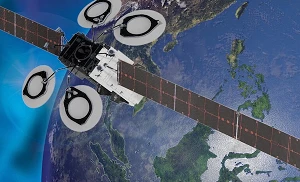
NSS-9 is a new satellite serving the Pacific Ocean Region, which is ideal for government users, broadcasters, carriers and the maritime industry. The all C-band satellite features three beams that can be interconnected on a transponder-by-transponder basis. A global beam provides coverage of the entire earth visible from 183 degrees East, a West Hemi beam covers Australia, Indonesia, the Philippines, Japan, China, Korea and the Pacific Islands, and an East Hemi beam provides coverage and connectivity to the US, Hawaii and Polynesia.
* SES World Skies is the new global division of SES, created through the combination of the former SES World Skies and SES Americom. The company operates a fleet of 25 satellites - part of the 40 spacecraft of the SES group - delivering services as diverse as television distribution and broadcast, Internet access, data transmission, and business and government communications to customers worldwide. SES World Skies currently has five additional satellites under construction. SES World Skies comprises a team of customer care and technical professionals located in Princeton (NJ), The Hague, Washington DC, Singapore, Beijing, London, Sao Paulo, Mexico City, Sydney, Accra and Johannesburg. SES wholly owns the satellite operators SES Astra and SES World Skies, 90% of SES Sirius in Europe, and strategic participations in Ciel in Canada and QuetzSat in Mexico.
More info:







Company registered in England, number 5724661
All content copyright © 2005-2026 Developing Telecoms Ltd. All rights reserved.