Mumbai Metro mobile connectivity dispute may be over
Jun 16, 2026



The US Trade and Development Agency (USTDA) has awarded a feasibility study grant to support SubConnex’s proposed SCNX3 subsea cable system, linking India and Singapore.
SCNX3 represents the first phase of a much larger network vision: a fully built-out SubConnex system would span up to 22,000 kilometres and is currently estimated to cost as much as US$1 billion.
The initial SCNX3 phase alone is expected to require investment of around US$350 million and is targeting a ready-for-service date of 2028–2029, subject to financing and regulatory approvals. The project aims to improve capacity, resilience and routing diversity across one of the world’s fastest-growing digital corridors, connecting major data centre hubs in South and Southeast Asia while offering an alternative eastward path for global traffic.
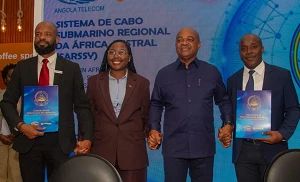
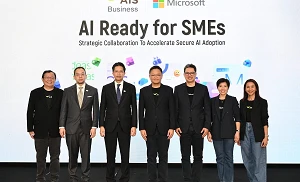
Developing Telecoms spoke with Danielle Agress (pictured, left), Indo-Pacific senior country manager at the USTDA, and Simon Zettl (pictured, middle), founder and CEO of SubConnex, about why the route matters, how feasibility studies de-risk complex cable builds, and what industry players should watch next.
What does USTDA’s support for the India–Singapore subsea cable study say about your broader digital infrastructure strategy in the Indo-Pacific?
Danielle Agress: USTDA is very active in digital infrastructure across the Indo-Pacific, particularly where there is strong demand from US companies. Subsea cables are a key area of focus because US suppliers are highly competitive in this sector and our partner countries are seeking to build trusted, high-quality connectivity.
Our role is to fund early-stage work such as feasibility studies that help projects move toward financing and implementation. For this project, SubConnex is our partner, and the feasibility study will be conducted by US-based AP Telecom. The goal is to analyse routes between India and Singapore that can improve redundancy, resilience and congestion relief while connecting major data centre hubs across Southeast Asia.
From SubConnex’s perspective, what problem in regional connectivity is SCNX3 designed to solve?
Simon Zettl: The core issue is that there is no fully integrated network that efficiently carries traffic from India toward the United States in an easterly direction. India has around 1.4 billion people, Southeast Asia another 400 million, yet more than half of the world’s data still resides in the US.
Historically, most India–US traffic has travelled westward through the Middle East and Europe. Recent disruptions have highlighted how vulnerable that route can be and how much latency can increase when traffic is forced onto longer paths.
SCNX3 creates an alternative by running east from India through Southeast Asia, connecting key data centre hubs such as Singapore and Johor, with the potential to extend onward. It improves resilience, reduces latency and provides additional routing diversity for one of the world’s most important data corridors.
Why is the India–Singapore corridor commercially compelling now, rather than five years ago or five years from now?
Simon Zettl: Demand has changed significantly. Hyperscale cloud providers are rapidly expanding their presence in India, and the country has relatively few subsea systems for its population size. That has driven stronger demand for new international capacity and made local carriers more open to working with independent developers.
Recent systems between India and Singapore have seen very strong uptake, to the point where partners are already seeking additional capacity. At the same time, subsea projects have long lead times. To achieve a realistic ready-for-service date around 2028 or 2029, development needs to begin now.
USTDA often refers to “trusted” digital infrastructure. In practical terms, what does that mean for a subsea cable project?
Danielle Agress: For USTDA, trusted infrastructure means supporting equipment and solutions from suppliers that meet U.S. security standards. This includes protecting sensitive data and ensuring networks remain operational and resilient.
While we work with trusted suppliers from multiple countries, US technology plays a central role. Our partners are looking for secure, reliable infrastructure that cannot be subject to malign influence, particularly for critical digital systems like subsea cables.
Simon Zettl: From a developer’s standpoint, trusted connectivity affects almost every decision. It influences which cable constructors, marine installers, funding partners and even customers we can work with. That does add cost, but it also ensures the system can interconnect with trusted markets and jurisdictions over the long term.
This is where USTDA support is particularly valuable, as it helps offset some of the additional cost associated with building a fully trusted network.
From an operator or investor perspective, what connectivity gaps does this project address?
Danielle Agress: One major issue is congestion, particularly at existing landing points in India. There is heavy concentration around Chennai, and new routes could help relieve pressure there. The feasibility study will analyse alternative landing options that align with planned digital and data centre investments, while improving redundancy and resilience across the region.
How does a USTDA-backed feasibility study de-risk a project compared with a purely commercial study?
Danielle Agress: Each USTDA study is tailored to the project’s specific needs. For this cable, the study includes detailed technical, economic and financial analysis, while also supporting early engagement with investors, financiers and landing partners.
By providing high-quality data and independent analysis, the study allows SubConnex to have informed discussions with stakeholders at a much earlier stage, which significantly reduces uncertainty and investment risk.
Simon Zettl: The study produces a comprehensive, investor-ready package. Without this level of support, developers often have to limit their analysis due to cost. The USTDA-funded work allows us to evaluate multiple routing, design and market options, ensuring the final system is optimised for the regions it serves.
How does SCNX3 fit alongside existing subsea systems in the region?
Simon Zettl: It is fundamentally complementary. The biggest risk in subsea today is not demand, but resilience. Repair times are increasing due to limited marine fleet availability, so the only real mitigation is more cables.
India-Singapore can support multiple additional systems and still remain commercially viable. Just as we continue to see new high-capacity systems across the Atlantic, additional capacity in Asia is essential to manage growth, redundancy and risk.
What happens once the feasibility study is completed?
Danielle Agress: Following the study, the focus shifts toward implementation. Industry should watch for announcements related to financing, construction timelines and readiness for service.
Simon Zettl: The feasibility covers demand validation, route optimisation, landing locations, regulatory requirements, construction planning and full financial modelling. The key milestone is demonstrating that the system is commercially viable, technically feasible and financeable. Once those conditions are met, the project can move into procurement and build-out.
What signals will you be watching over the next 12 months to gauge momentum?
Simon Zettl: We will be watching regulatory developments, marine corridor access, data centre investment trends and how quickly new capacity is being absorbed in India and Southeast Asia. We are also monitoring how other planned systems evolve and whether collaboration can accelerate deployment.
Is this cable a standalone project or part of a broader network vision?
Danielle Agress: It can function as both. SCNX3 is a strong standalone system, but it also has the potential to interconnect with other trusted subsea projects in the Indo-Pacific. USTDA supports multiple feasibility studies across the region, and collectively these projects can strengthen resilience and connectivity at a network level.
What is one misconception that feasibility studies help clarify for investors?
Simon Zettl: Many investors perceive subsea cables as riskier than terrestrial infrastructure. In reality, subsea systems are often more reliable. The feasibility study helps quantify risk, identify optimal routes and demonstrate that subsea projects can deliver stable, long-term returns when properly designed.




Company registered in England, number 5724661
All content copyright © 2005-2026 Developing Telecoms Ltd. All rights reserved.