

As WTDC-25 ends, report highlights ongoing digital development gaps
- Details
- Category: Regulation
- 9831 views

Member States of the International Telecommunication Union (ITU) agreed on a roadmap to bring connectivity to everyone around the world as the World Telecommunication Development Conference (WTDC-25) closed last week in Baku, Azerbaijan.
The two-week conference brought together about 2,000 participants representing 153 member states and the State of Palestine under Resolution 99.
The ITU, the United Nations specialised agency for digital technologies, says that the Baku Action Plan agreed at WTDC-25 sets the agenda for human-centred digital development driven by telecommunications and information and communication technologies with a focus on the needs of developing countries, underserved communities and vulnerable populations.
With an estimated 2.2 billion people worldwide still offline, the ITU says the four-year plan – spanning 2026 to 2029 – supports efforts to advance universal, meaningful and affordable digital connectivity for an inclusive and sustainable digital future.
But can these aims be achieved? During the conference, the ITU issued its Global Connectivity Report 2025, described as “a comprehensive assessment of the evolution of global connectivity”. As the report says, connectivity has undergone a profound transformation over the last thirty years. By 2025, some 6 billion people are online, representing approximately three-quarters of the world’s population.
There are still challenges of course. Unequal access, uneven quality, limited coverage, high costs, affordability and availability of devices, and limited digital skills play a part in the slow progress of some regions compared to others.
Indeed, regional differences remain stark: Europe and the Commonwealth of Independent States (CIS) are nearing the 95% universality target, while internet use in Africa stands at just over one in three.
As well as the digital divide, another problem is the gender divide, shown by a global parity score – the ratio between the proportions of women and men using the internet – of 0.92, and, apparently, progress has stalled. The gender gap is most significant in low and lower-middle-income countries, especially in Africa and South Asia, where women are far less likely to be online.
Other concerns addressed by the report include the health dangers of heavy screen use, problems of misinformation and disinformation, and the environmental costs of digitalisation, notably data centres and e-waste.
The report is free to download on the ITU website.
More Articles you may be Interested in...



Yas Tanzania and Ericsson partner for enhanced 4G



Payment platform for farmers launched in Malawi

Orange Jordan to support census plans



Wego introduces digital platform for Umrah pilgrims

True IDC breaks ground on major Bangkok facility





Funding boost for telecom energy services in Africa
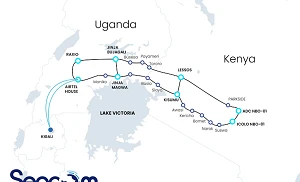
Seacom launches new terrestrial route in East Africa




Dubai’s du joins SME-focused initiative

Egypt approves major data centre project