ZTE and BBTEC explore collaboration in Thailand
Sep 01, 2026

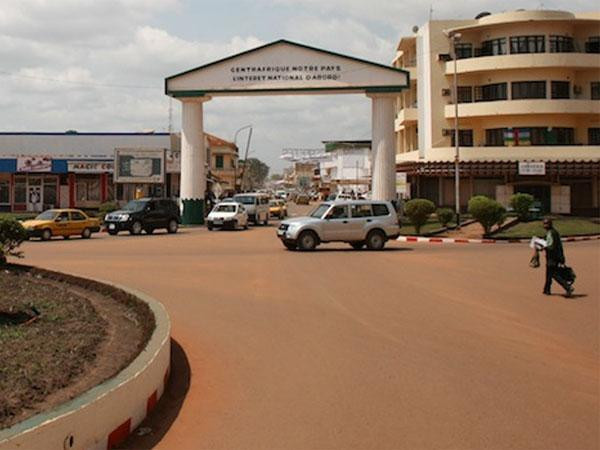
Government-supported attempts are reported to be underway to save troubled operators in Guinea and the Central African Republic – but will they succeed?
Guinea’s Communications, Digital Economy and Innovation Minister Mourana Soumah has this week pressed private operator Cellcom to increase investment, improve service quality and expand network coverage.
The company, however, is dealing with an ongoing collapse in market share (2.4% of the country's 12.8 million mobile subscriptions according to figures from mid-2025), a dispute with some employees over unfair dismissals, delayed salary payments, mismanagement and even unpaid rent on its headquarters.
Other problems include obsolete network infrastructure and a threat from the Autonomous Federation of Telecommunications Unions (FESATEL) to ask the authorities to audit Cellcom and, if necessary, place the company under temporary administration.
Cellcom apparently said in an April statement that it had launched a restructuring programme. It also obtained a new operating licence at the start of 2026. But can it find enough money to modernise its network and arrest subscriber losses?
Similar issues face Central African Republic operator Socatel. The country’s government recently announced the launch of the implementation of a memorandum of understanding (MoU) signed in September 2025 with the American company Greenline Technologies for the takeover and transformation of Socatel .
The partnership includes a reported planned investment of US$150 million to modernise Socatel’s infrastructure and services, build a Tier 3 data centre and deploy a nationwide connectivity ecosystem.
Efforts to revive Socatel apparently date back to at least 2020, when the government signed an agreement with the French company Global Technologies to restore and modernise some of the operator’s historical infrastructure. There is little information on the progress of this initiative.
However, Socatel’s difficulties may have begun as long ago as the late 1990s and early 2000s, when it was affected, not too surprisingly, by the country’s political and security crises. However, it has also had to deal with private competition, weakness in governance and operations and a focus on fixed telephony in a market transformed by the rise of mobile operators. Infrastructure modernisation is, inevitably, another issue,
For both operators, however, the main challenge may simply be finding ways to close the gap with competition – from Orange Central African Republic, Telecel and Moov Africa (and even Starlink) in the Central African Republic and Orange and MTN in Guinea.








Company registered in England, number 5724661
All content copyright © 2005-2026 Developing Telecoms Ltd. All rights reserved.