Huawei RAMS Architecture Drives ISP/MSP Business Success
- Details
- Category: Wireless Networks
- 81497 views

More families are streaming High-Definition (HD) movies and play cloud games. Enterprises are increasingly moving their services to the cloud and embracing remote work. AI models are processing massive amounts of data for analysis and decision-making. With all of these changes afoot, the question arises, how should Internet Service Providers (ISPs) adapt in order to better serve their customers?
Too often, they remain confined to their network infrastructure, passively awaiting customer queries, such as "How much bandwidth do I have?" Or perhaps, "Why did my signal drop?" As a result, they are missing out on opportunities to provide customers with new services.
The digital economy is booming, novel services are exploding, and traffic is multiplying every year. Even still, ISPs are caught in a trap where traffic is soaring, but revenue has not grown substantially alongside it. Their most valuable asset—the network—is being devalued by price wars in an increasingly competitive, saturated broadband market.
What role should ISPs and Managed Service Providers (MSPs) play amid digital and intelligent transformation? More importantly, how can they get back on the path to sustained business growth?
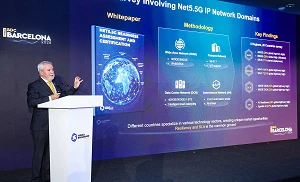
Some of these questions are answered in a recently released white paper by Huawei. Earlier this year, at HUAWEI CONNECT 2025, the company released the ISP/MSP Business Success Driven by RAMS White Paper V1.0. In introducing a new RAMS framework: Return on Investment (ROI), Availability, Maintenance, and Security, the white paper proposes a new market positioning of ISPs and MSPs.
It also offers optimal strategies for network evolution and service planning that will guide ISPs and MSPs toward business success.
The breakout strategy: Evolving from a connectivity provider to a digital and intelligent transformation partner
Today, home broadband users demand quality. They want smooth HD videos and lag-free gaming. For enterprises, moving all services to the cloud necessitates better network performance, such as faster service provisioning and more stable, higher-speed data transmission. Adding to this demand, AI inference is moving closer to the user, fueling rapid growth in real-time interactive services that require smarter, more flexible networks.
To navigate this dramatic market change, ISPs and MSPs must move beyond providing only connection services and upgrade into a true partner for digital and intelligent transformation. This shift allows them to retain existing customers and attract new ones by delivering premium experiences, while also discovering new opportunities as they provide stronger support for growing smart services.
While the network is essential when competing for business opportunities, the most decisive factors lie in the intelligence, availability, and security behind the network. To this end, ISPs and MSPs must promote both intelligence and platform-based development. Intelligence should be woven across all network scenarios and elements, including O&M and services, to improve automation and flexibility. Platform-based development focuses on building Network-as-a-Service (NaaS) capabilities and upgrading services through an intelligent network platform to make network bandwidth schedulable, service quality manageable, and path orchestration simple. This forms the foundation for designing new service plans that differentiate an ISP or MSP from the competition.
By building intelligence and platform-based capabilities, ISPs and MSPs can flexibly mix and match features like network intelligence, availability, and security, then package and sell them as commercial offerings. Instead of being connection builders, ISPs and MSPs can become capability operators. This allows them to provide a broader service portfolio, improve service quality, and create a unique competitive advantage in the broadband market.
RAMS: Four pillars of intelligent, resilient networks
ISPs and MSPs must rise to the challenge of the modern market and do more than just plan networks. They must explore paths for sustained growth based on changing user needs and commercial feasibility. This is where the RAMS framework comes in. Through RAMS, Huawei links ROI with network and service planning, outlines strategies for improving network availability, highlights directions for intelligent O&M, and demonstrates approaches to building secure and reliable networks. For ISPs and MSPs, RAMS is both a framework for constructing intelligent, resilient networks, and a factor that will directly influence investment outcomes. It also represents the four key dimensions that determine whether services and networks can achieve business success.
ROI involves both spending and income. Analyzing ROI helps ISPs and MSPs find ways to slash construction and O&M costs while identifying new paths to revenue growth. The white paper presents a formula for calculating the ROI of broadband investments. By examining the relationship between variables in the formula, ISPs and MSPs can determine how internal and external factors influence ROI and optimize their network investment strategies accordingly. One practical example is addressing plateauing growth when broadband device utilization in an area reaches 20%–25%. ROI calculations suggest that at this point, idle network resources can be used to launch lower-tier service plans, and by guaranteeing Service Level Agreements (SLAs) for different tiers of customers through network slicing, revenue will increase without compromising user experience. Similarly, although introducing intelligent O&M adds an initial cost, the ROI formula confirms that this cost can be neutralized by long-term O&M savings and the gains from new services and end-to-end service assurance.
Availability emphasizes a shift from offering best-effort network services to providing deterministic, committed SLAs. It is a critical way a network demonstrates its intelligence and resilience. Nowadays, availability is no longer just about avoiding network interruptions, but about offering comprehensive assurance for granular indicators such as latency, jitter, and packet loss, particularly for Business-to-Business (B2B) private lines, cloud gaming, and interactive services. For example, traditional B2B private lines require on-site network deployment, coordination among vendors, and manual configuration, which is time-consuming and labor-intensive. However, if B2B private lines are broken down into capability modules, such as the access method, Quality of Service (QoS), security, and path protection, and these modules are packaged as standardized offerings, customers can place orders on a platform for automatic service configuration and provisioning. In addition, customers can view and manage their network and service status in real time. High availability lays the foundation for ISPs and MSPs to market their network capabilities as standardized products, and is the essential stepping stone for them to unlock new value within the B2B market.
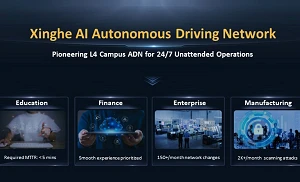
Maintenance, especially intelligent O&M, is a powerful tool for coping with increasingly complex networks and business models. It empowers ISPs and MSPs to build autonomous driving networks that can intelligently predict faults, assess root causes, and automatically handle issues. This allows service providers to transform from reactive troubleshooting to proactive prediction, significantly improving O&M efficiency and user experience. Maintenance is essential for ISPs and MSPs if they want to evolve into operators that deliver premium experiences, and it's the foundation for offering services that stand out from competitors.
Security is a necessity for B2B services. Industries such as finance, government, and healthcare face strict data security and compliance regulations, so they demand strong security beyond just high-quality network connections. The RAMS framework stresses that security must be inherent to the network. Network connections provided by ISPs and MSPs should be secure by default, with the flexibility to integrate advanced security services such as Distributed Denial of Service (DDoS) protection and Secure Access Service Edge (SASE) based on customer needs. A network that is inherently secure and compliant is highly attractive to B2B customers. It is a good way for service providers to build a unique competitive advantage, rapidly break into the high-end market, and generate higher profits.
Firm commitment for a promising future
RAMS defines an intelligent, resilient network from four dimensions. While each dimension has a specific focus, they are closely linked and reinforce each other. A scientific ROI analysis optimizes resource allocation, supporting the construction of a highly available, intelligent, and secure network. Enhancing availability is an effective way to improve both ROI and security. Developing an intelligent maintenance platform guarantees network availability and security while simultaneously optimizing ROI. Finally, building a highly secure network ensures that it delivers high availability and wins the trust of B2B customers, realizing its maximum business value.
More than just a theoretical framework, RAMS is a practical operating guide for ISPs and MSPs. In the white paper, Huawei presents a wide range of scenario-specific implementation solutions, including experience-centric operations for home broadband, platform-based and product-based design for B2B private lines, and the IP+optical synergy mechanism, along with commercial success stories from around the world. These concrete solutions and case studies demonstrate how the RAMS framework offers a clear path to building intelligent, resilient networks. They also underscore how RAMS is a proven way to help ISPs and MSPs design new products and optimize revenue structures.
ISPs and MSPs now stand at a critical crossroads. To reclaim their core position in the ICT value chain, they must break free from the pipe provider trap where they only sell raw connectivity. The time to act is now.
Huawei has long worked closely with ISPs and MSPs worldwide and understands market trends well. To date, Huawei has supplied leading products, solutions, and services to over 5,000 ISP/MSP clients across more than 120 countries and regions worldwide, Through the RAMS framework, developed based on industry insights, Huawei explores a development path driven by both commercial and technological advancements. The company aims to help ISPs and MSPs leave the intensely competitive red ocean of basic connectivity services and enter into a new blue-ocean market of powering intelligent transformation across industries.
View and download the ISP/MSP Business Success Driven by RAMS White Paper V1.0 here:
https://e.huawei.com/en/documents/solutions/ict-service-provider/a8174b693423470cb5ad3edcf9c9d59c
Frank Lu is the Vice President of ISP & OTT, Director of ISP & OTT MKT & Solution Sales at Huawei
More Articles you may be Interested in...



Huawei proposes alternative to Moore’s Law










Huawei holds steady as industry headwinds persist